Summary of Breast Cancer & Symptoms
Breast cancer is a disease located in the breast where abnormal cells grow uncontrollably in the tissue. It starts in the Ducts, they are tubes that transport milk to the nipple or Lobules which are small sacs/glands that produce milk off the breast. Together they are called lobes. They are surrounded by fat and are connected. Some common symptoms of early breast cancer may include but aren’t limited to lumps in the breast or underarm, Change in breast shape or size, Skin dimpling /puckering , Nipple discharge that can be bloody, Nipple Inversion/turning inward and Redness or thickening of breast skin. Some may have little to no symptoms.

Prevalence
- One of the most common cancers in the world
- Common in women
- Men can also get it but it is Rare
- 1 in 8 women in the U.S
- Risk increases with age
Survival rate
- 5-year survival rate overall: 90% if detected early
- Much lower if it spreads/metastasizes to other organs
- Early detection is key for survival
Risk factors and Prevention
There is no single cause, but risk increases with Age, there is a risk increase after the age of 50. Another common risk is family history or genetic mutations like “BRCA1/BRCA2”, Hormone exposure/estrogen levels over time, Obesity and lack of exercise. Other risks may be the overconsumption of alcohol use, radiation exposure, starting menstruation early or menopause late.Not all cases are preventable but risk can be reduced by regular daily exercise, maintaining a healthy body weight, limiting alcohol intake, Breastfeeding can be slightly protective, depending circumstance, Regular screening /mammograms, and Genetic testing if at high-risk.


Common treatments & side effects
Some common treatments depend on stages and surgery type “lumpectomy or mastectomy” Chemotherapy, Radiation therapy and Hormone therapy are some examples
Some Side effects are Fatigueness, Hair loss/chemotherapy, Nausea and vomiting, Skin irritation, Menopause-like symptoms, Weakened immune system, Emotional stress and anxiety.
How is it detected?
Detection methods Mammograms, X-rays of breast tissue, Breast self-exams, Clinical breast exams by doctors, Ultrasound or MRI/ further imaging, Biopsy tend to confirming cancer by testing the tissue.
Cell cycle gone wrong/right
Breast cancer happens when the normal cell cycle the process that controls how cells grow and divide stops working correctly. In a healthy cell, there are checkpoints during the cell cycle (like G1, S, G2, and M phases) that make sure everything is working properly before the cell divides. If something is wrong, the cell will either fix the problem or stop dividing.
In breast cancer, these checkpoints fail especially the G1 checkpoint which normally checks for DNA damage before the cell copies its DNA. Because this checkpoint is not working correctly, damaged cells keep dividing instead of stopping. This leads to a buildup of abnormal cells, forming a tumor.

Example:
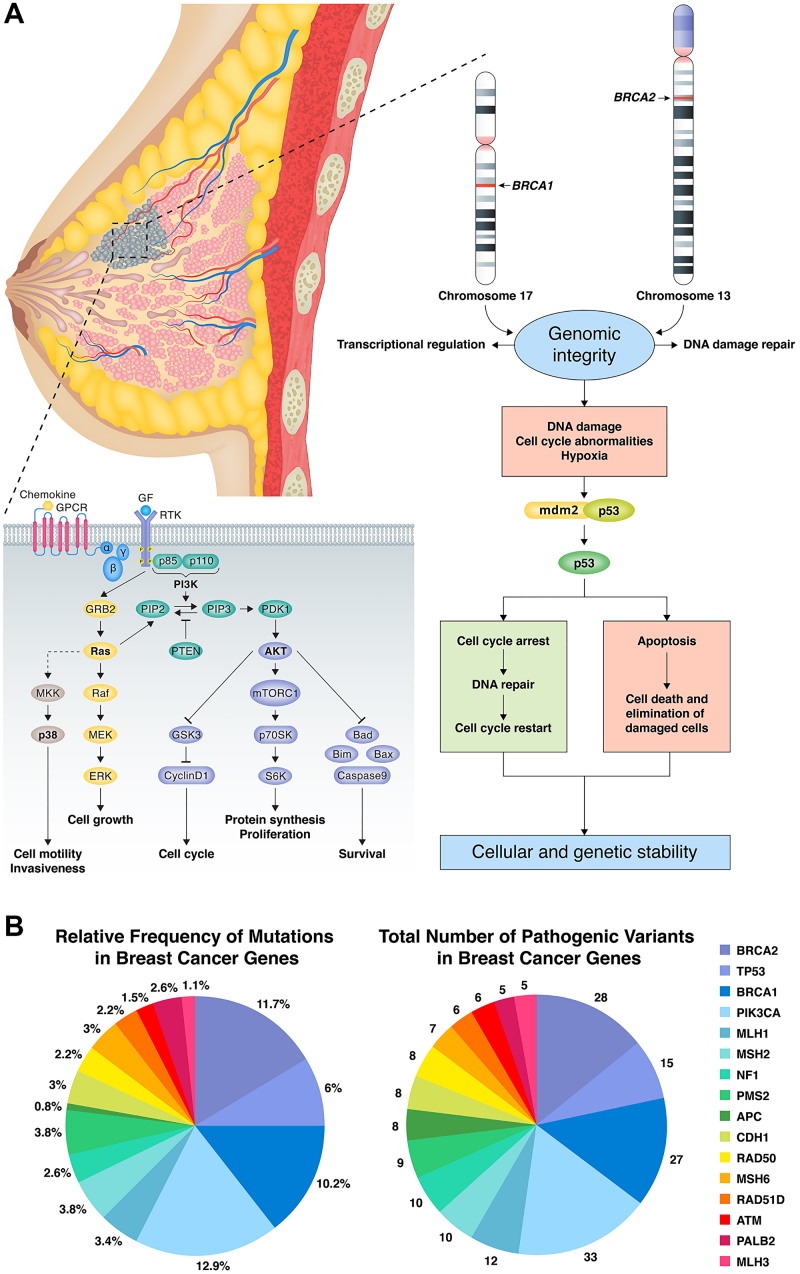
For example, in many breast cancer cases, a gene called BRCA1 or BRCA2 is mutated. These genes normally help repair damaged DNA. When they don't work DNA errors are not fixed, and cells continue to divide uncontrollably.
Healthy cell vs. cancer cell:
Healthy cell: follows checkpoints, repairs DNA, or stops dividing if something is wrong
Breast cancer cell: ignores checkpoints, does not repair DNA, and keeps dividing rapidly
Relation to gene expression/Mutation
Breast cancer is strongly connected to gene expression and mutations in DNA. According to the central dogma of biology (DNA - RNA - protein)
DNA holds instructions for making proteins that control cell behavior.
In breast cancer, mutations change the DNA, which changes the proteins being made. This affects how cells grow and divide.
One important type of mutation in breast cancer is a mutation in tumor suppressor genes (like BRCA1, BRCA2). These genes normally slow down cell division or fix DNA. When they are mutated, they stop working properly.
Mutated vs. non-mutated DNA:
• Non-mutated DNA: produces normal proteins that control cell growth
• Mutated DNA: produces faulty proteins or no protein at all, leading to uncontrolled cell division
For example, if BRCA1 is mutated, the cell cannot repair DNA damage. This causes more mutations to build up over time, increasing the risk of cancer.
Cited
(The American Cancer Society medical and editorial content team) (November 19,2021) (What is Breast Cancer ) https://www.cancer.org/cancer/types/breast-cancer/about/what-is-breast-cancer.html
(What causes breast Cancer?”)https://www.cancer.org/cancer/types/breast-cancer/about/how-does-breast-cancer-form.html
(Lifestyle - Related Breast Cancer Risk Factors ) https://www.cancer.org/cancer/types/breast-cancer/risk-and-prevention/lifestyle-related-breast-cancer-risk-factors.html
Create Your Own Website With Webador